Client-side vs Server-side
Client-side vs Server-side
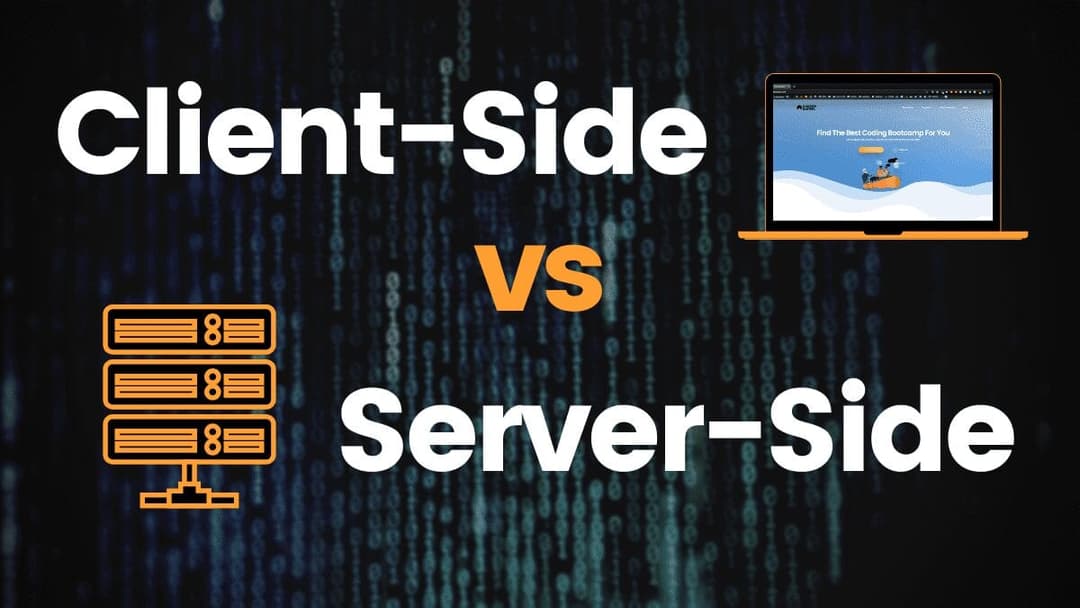
When you use a website or an app, it feels instant. You tap a button, the page updates, something loads, and everything just works. But behind the curtain, there’s a careful dance happening between two sides: the client-side and the server-side.
The client-side is like the front of the house in a restaurant. It’s where you sit down, look at the menu, and interact with the waiters. Everything you see and touch in your browser—buttons, menus, images, animations—is part of the client-side. It’s powered by technologies like HTML, CSS, and JavaScript. For example, when you scroll through Instagram and posts keep loading smoothly without refreshing, that’s client-side rendering working its charm.
The server-side, on the other hand, is like the kitchen. You don’t see what’s happening back there, but that’s where the heavy lifting occurs. The server checks if you’re logged in, fetches your profile data, stores your new posts, and ensures your private messages are safe. Programming languages like Python, Java, Node.js, or PHP usually handle this side. If the client-side is the sparkle, the server-side is the substance.
Here’s where things get interesting: some apps rely more on the client-side (think modern single-page apps that run smoothly in your browser), while others lean heavily on the server-side (think online banking apps where security and processing are critical). In reality, the best systems balance both.
Without the client-side, the web would feel like an empty terminal window—functional but boring. Without the server-side, it would be flashy but hollow, like a video game without saved progress. Together, they make the internet feel alive, interactive, and reliable.
So the next time you hit “Submit” on a form, just remember: your browser and the server are having a quick conversation, deciding what happens next. One makes it look pretty, the other makes it actually work.