Vibrations
Vibrations
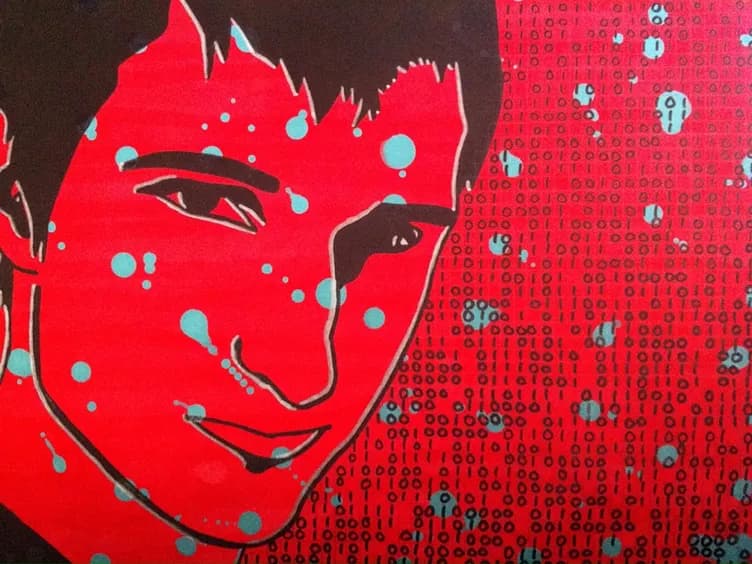
Long before science gave vibration equations and measurements, humans already believed that the world was moving, breathing, and resonating. Across ancient cultures, vibration was not a technical concept. It was a living force. A hidden rhythm believed to animate everything from stars to stones, from breath to thought.
In these traditions, nothing was truly still. Stillness was considered an illusion created by limited perception. What appeared silent or unmoving was simply vibrating beyond human awareness. This belief shaped how early humans understood existence, consciousness, and their place in the universe.
To them, vibration was not something you studied. It was something you felt.
Many ancient philosophies taught that the universe began with sound. Not sound as humans hear it, but a primordial vibration, a first movement that set everything else into motion. In Hindu philosophy, this idea appears as the sacred sound “Om”, believed to be the vibration from which all reality emerged. Om was not just a chant. It was considered the audible expression of existence itself, a bridge between the material and the unseen.
Similarly, ancient Greek thinkers believed the universe was structured through harmony. Pythagoras famously taught that numbers and musical ratios governed reality, an idea later called the “music of the spheres.” Planets were believed to move in perfect vibrational harmony, producing a cosmic music too pure for human ears. To live well was to live in alignment with this unseen rhythm.
In these mythic worldviews, vibration was closely tied to the soul. Humans were thought to resonate with their environment, absorbing and emitting subtle movements through thought, emotion, and intention. This is where ideas like “good vibes” and “bad vibes” find their roots. They were not casual expressions. They were attempts to describe an intuitive sense that emotional states could influence one’s inner rhythm and, in turn, how one interacted with the world.
Ancient healers believed illness was a form of disharmony. Health meant balance, rhythm, and flow. When someone fell ill, it was not merely a physical problem but a disturbance in their vibrational state. Music, chanting, drumming, and ritual movement were used to restore alignment. Sound was medicine. Rhythm was repair.
Across indigenous cultures, drums played a central role in spiritual practice. The steady beat was believed to synchronize the individual with the earth itself. Many shamans described entering altered states of consciousness through repetitive rhythm, not by force but by resonance. The vibration carried them inward, dissolving the boundary between body and spirit.
In myth, vibration was also linked to creation and destruction. Words were powerful because they were vibrations shaped by intention. Speaking was not neutral. To name something was to give it form. This belief persists in stories where spells, chants, and spoken truths reshape reality. Sound was never just communication. It was action.
Over time, these ideas evolved into more abstract beliefs about frequency and consciousness. Some traditions taught that emotions carried different vibrational qualities. Love was expansive and harmonious. Fear was tight and chaotic. While these descriptions are symbolic rather than scientific, they reflect a deep human intuition: emotional states feel physically different. Joy feels light and open. Anxiety feels heavy and constricting. Ancient language used vibration to explain these sensations long before neuroscience existed.
Myths often warned about resonance as well. When a person fell out of alignment with themselves or the world, they were said to attract misfortune. This was not framed as punishment, but as mismatch. Like a string vibrating out of tune, their life produced dissonance instead of harmony. The solution was not control, but recalibration, through reflection, ritual, silence, or sound.
Modern interpretations of vibration sometimes exaggerate these ideas into literal claims about energy fields and measurable frequencies of thought. Ancient traditions were rarely so rigid. Their language was symbolic, experiential, and metaphorical. Vibration was a way to talk about connection, rhythm, and participation in something larger than the self.
What made these myths powerful was not scientific accuracy, but meaning. They gave people a way to understand why environments feel different, why certain voices calm us, why music moves us, and why being around certain people feels energizing or draining. Vibration became a story that explained invisible influence.
Even today, these ideas persist because they speak to lived experience. Humans instinctively respond to tone, rhythm, silence, and movement. We feel when something is off. We feel when something resonates. Mythical language gives shape to those feelings when logic falls short.
Perhaps the enduring appeal of vibration myths lies in this truth: humans are not observers of the universe. They are participants in it. Everything moves, and everything affects everything else, whether through sound, presence, or attention. To say that everything vibrates is not just to describe motion. It is to suggest relationship.
In myth, vibration is the reminder that nothing exists in isolation. Every thought, word, and action sends ripples outward, shaping the unseen fabric of experience. Whether taken literally or symbolically, the idea carries weight.
The universe, in these stories, is not silent. It is humming. And to live well is not to dominate that hum, but to listen for it, and learn how to move in time with its rhythm.
Final Thought
Vibrations are not mystical forces hidden from science.
They are the language of motion, and life speaks it fluently.
You hear through vibration.
You move through vibration.
You communicate through vibration.
Nothing about being human is static.
Humans respond strongly to rhythm.
Environment affects mental state.
Sound, tone, and movement influence emotion.
Stillness and chaos feel physically different.